Home/Blog/How Much Do HVAC Technicians Make? (2026 Salary Guide)
How Much Do HVAC Technicians Make? (2026 Salary Guide)
August 10, 2026
Dr. Rajesh Rolen
5 min read
This 2026 HVAC salary guide explains how much HVAC technicians can earn based on experience, certifications, specialization, location, union status, and overtime. It covers U.S. salary benchmarks, monthly pay, high-paying specialities and states, international salary comparisons, certifications, career progression, and emerging technologies shaping future earning potential.
Higher Technician Pay Demands Better Job Control.
Rising technician costs put pressure on HVAC margins, especially when scheduling, field attendance, and job progress are difficult to track. DuctArchitect helps contractors keep field teams, site activity, and job assignments visible so labor costs stay tied to productive work.
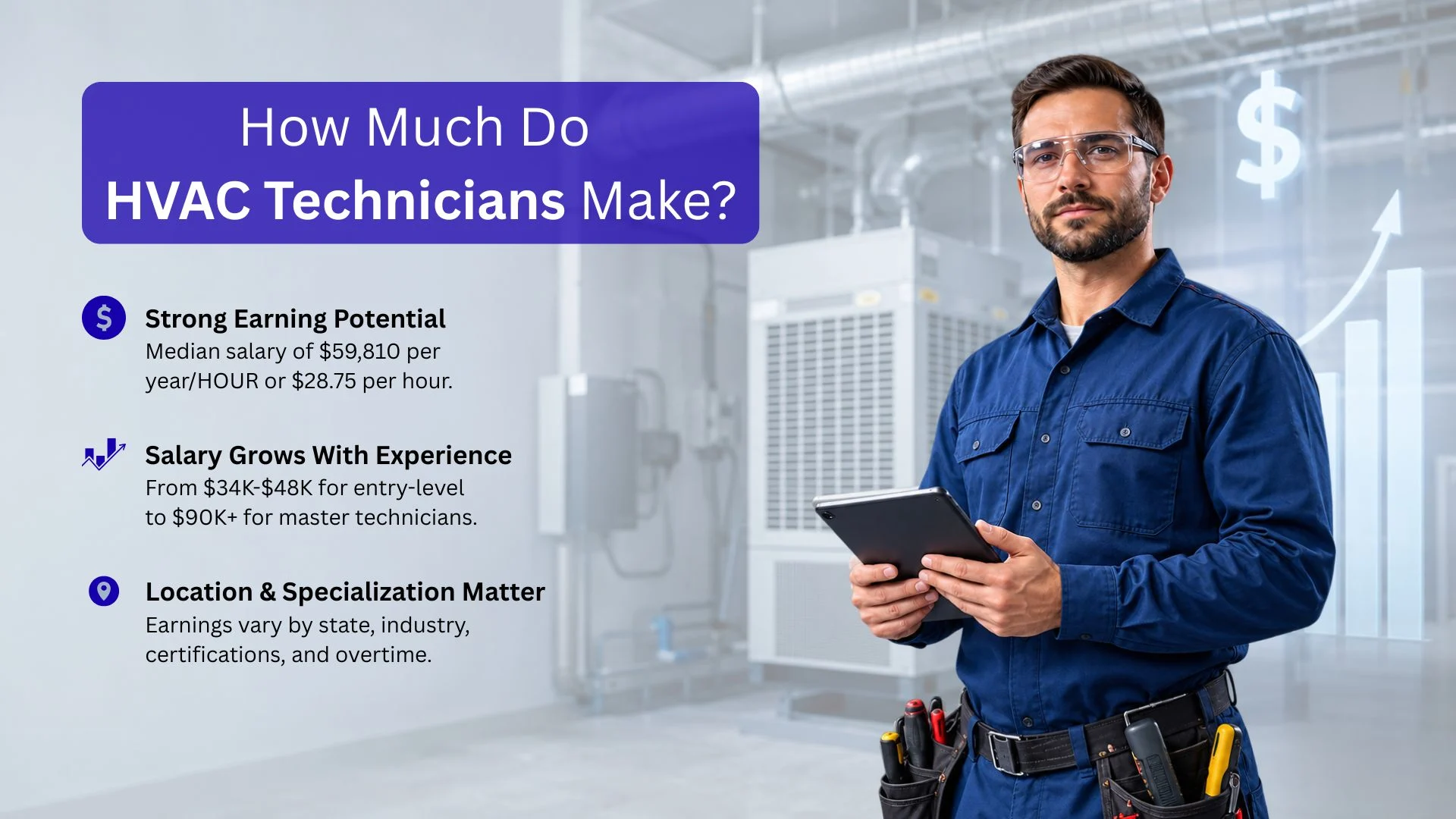
According to the U.S. Bureau of Labor Statistics (BLS), the median salary for HVAC technicians in the United States is $59,810 per year, or about $28.75 per hour. However, your actual earnings can vary significantly depending on your experience, certifications, specialization, location, and overtime opportunities.
If you're researching how much HVAC techs make, you've probably noticed that different websites report different numbers. That's completely normal. Salary figures vary because each platform collects data differently, and no single number tells the complete story.
This guide goes beyond average salary figures. Instead of simply showing one national average, we'll explain what actually affects HVAC technician pay, including experience, certifications, commercial versus residential work, union membership, and even salary differences across countries.
Whether you're thinking about becoming an HVAC technician, already working in the trade, or planning your next career move, this guide will help you understand what you can realistically expect to earn in 2026.
How We Calculated These Salary Figures
Salary data can vary depending on where it's collected, so we reviewed multiple trusted industry sources before preparing this guide. For all U.S. salary figures, we use the U.S. Bureau of Labor Statistics (BLS) as our primary source because it collects wage data directly from employers across the country. This makes it one of the most reliable sources for occupational salary information. We also reviewed several industry salary databases to compare wage trends, experience-based salary ranges, and regional differences. Since every platform uses a different methodology, it's normal to see slight differences between reported averages.
For the international salary comparisons later in this guide, earnings are shown in local currency along with approximate U.S. dollar equivalents. These comparisons are intended to help readers understand overall market trends rather than compare salaries on a dollar-for-dollar basis.
What Is the Average HVAC Technician Salary?
According to the U.S. Bureau of Labor Statistics (BLS), the median annual salary for heating, air conditioning, and refrigeration mechanics and installers is $59,810, which works out to approximately $28.75 per hour. While this is considered the national benchmark, it's important to remember that HVAC technician salaries aren't fixed. A newly hired apprentice won't earn the same as an experienced commercial refrigeration technician, and someone working in a large metropolitan area may earn considerably more than someone working in a smaller town.
The table below provides a better picture of how HVAC salaries are distributed across the profession.
Salary Level
Annual Salary
25th Percentile
~$46,000
Median
$59,810
75th Percentile
~$66,500
Top 10%
$91,020+
These numbers show that HVAC offers strong earning potential as technicians gain experience and develop specialized skills. While many technicians begin their careers below the national average, salaries typically increase as they earn certifications, work independently, and move into commercial or specialty HVAC systems. It's also worth remembering that base salary doesn't always reflect total earnings. Many HVAC technicians increase their annual income through overtime, emergency service calls, weekend work, performance bonuses, and employer-provided benefits such as company vehicles, health insurance, retirement plans, and paid training.
How Much Do HVAC Techs Make Per Month?
Many people searching for HVAC salaries also want to know the HVAC technician salary per month, especially when comparing job offers or planning a career change. Using the national median salary reported by the U.S. Bureau of Labor Statistics, the average HVAC technician earns approximately $4,984 per month before taxes and deductions.
Average HVAC Technician Salary by Pay Period
Pay Period
Average Earnings
Annual
$59,810
Monthly
~$4,984
Weekly
~$1,150
Hourly
$28.75
Monthly earnings can change throughout the year depending on workload and overtime availability. During the peak cooling season in summer and the heating season in winter, many HVAC companies receive a higher volume of emergency service calls. Technicians who work evenings, weekends, or on-call shifts often earn considerably more than their base salary during these busy periods.
In addition to wages, many employers provide benefits that increase overall compensation, including:
Company vehicle
Tool allowance or reimbursement
Paid certifications and training
Performance bonuses
Health insurance
Retirement contributions
Paid uniforms and safety equipment
When evaluating an HVAC job, don't focus only on the advertised salary. Looking at overtime opportunities, employee benefits, and career growth can give you a much better understanding of your total earning potential.
How Does HVAC Salary Change by Experience Level?
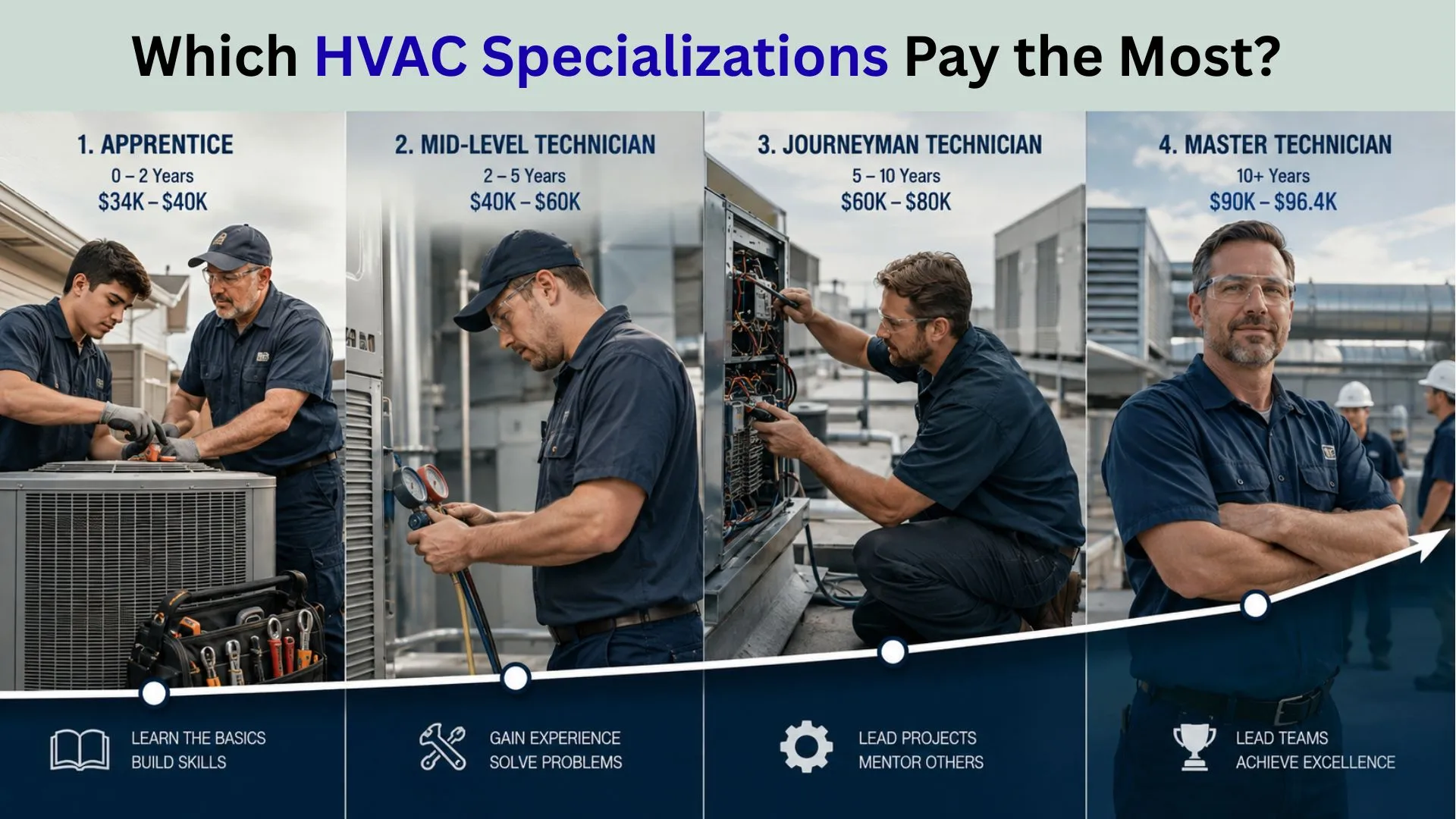
One of the biggest factors affecting an HVAC technician's salary is experience. As technicians gain hands-on knowledge, earn industry certifications, and take on more complex systems, their earning potential increases significantly. However, years on the job aren't the only factor. Employers also value the ability to diagnose problems independently, work with commercial equipment, mentor apprentices, and complete projects efficiently. That's why salary growth often accelerates after the first few years in the trade. The table below shows a typical salary progression for HVAC technicians in the United States.
Experience Level
Average Annual Salary
Apprentice / Entry-Level
$34,000 – $48,000
Mid-Level (2–4 Years)
$65,000 – $66,000
Senior / Journeyman (4–7 Years)
~$77,000
Supervisor / Master Technician (7+ Years)
$90,000 – $96,400
Entry-Level HVAC Technicians
Most HVAC technicians begin their careers as apprentices or helpers. During this stage, they assist experienced technicians with installations, maintenance, ductwork, refrigerant handling, and equipment inspections while learning industry best practices. Although entry-level salaries are lower, apprentices are paid while they learn, making HVAC one of the few skilled trades where you can earn an income from your first day on the job instead of accumulating college debt.
Mid-Level Technicians
After two to four years of experience, technicians are typically trusted to complete service calls independently. Many also earn their EPA Section 608 certification, allowing them to legally handle refrigerants. At this stage, salaries often increase substantially because employers rely on these technicians for troubleshooting, preventive maintenance, and customer-facing service work.
Senior and Journeyman Technicians
Senior technicians usually have several years of field experience and are comfortable working on both residential and commercial systems. Many also hold certifications such as NATE (North American Technician Excellence) or manufacturer-specific training. These technicians often supervise apprentices, diagnose complex equipment failures, and manage larger projects, making them significantly more valuable to employers.
Supervisor and Master Technicians
Experienced supervisors and master technicians represent the highest-paid employees before moving into management or business ownership.
In addition to technical expertise, they may be responsible for:
Leading installation teams
Managing commercial projects
Training junior technicians
Performing advanced diagnostics
Coordinating with project managers and customers
For many technicians, this career stage provides the foundation for six-figure earning potential, especially when combined with overtime or specialty certifications.
How Much Do HVAC Apprentices Make? (Hour by Hour)
If you're considering a career in HVAC, you may be wondering what you'll earn during your first few years. Unlike many professions that require four years of college before earning a salary, HVAC apprentices begin earning immediately while gaining practical experience.
Here's a typical progression based on industry salary trends.
The first year focuses on learning the fundamentals.
Apprentices commonly assist with:
Installing ductwork
Carrying equipment
Preparing tools
Cleaning work areas
Learning safety procedures
Observing experienced technicians during service calls
Although responsibilities are limited, every job helps build practical experience that employers value.
After One Year
Once technicians gain field experience and complete their EPA certification, they're often trusted with routine residential maintenance and simple repair work. This milestone usually comes with a noticeable pay increase because technicians require less supervision.
Licensed Journeyman
Journeyman technicians work independently and handle complete service calls from diagnosis to repair.
Many also:
Train new apprentices
Handle customer communication
Perform emergency repairs
Participate in on-call rotations
These additional responsibilities contribute to higher hourly wages.
Senior Specialists
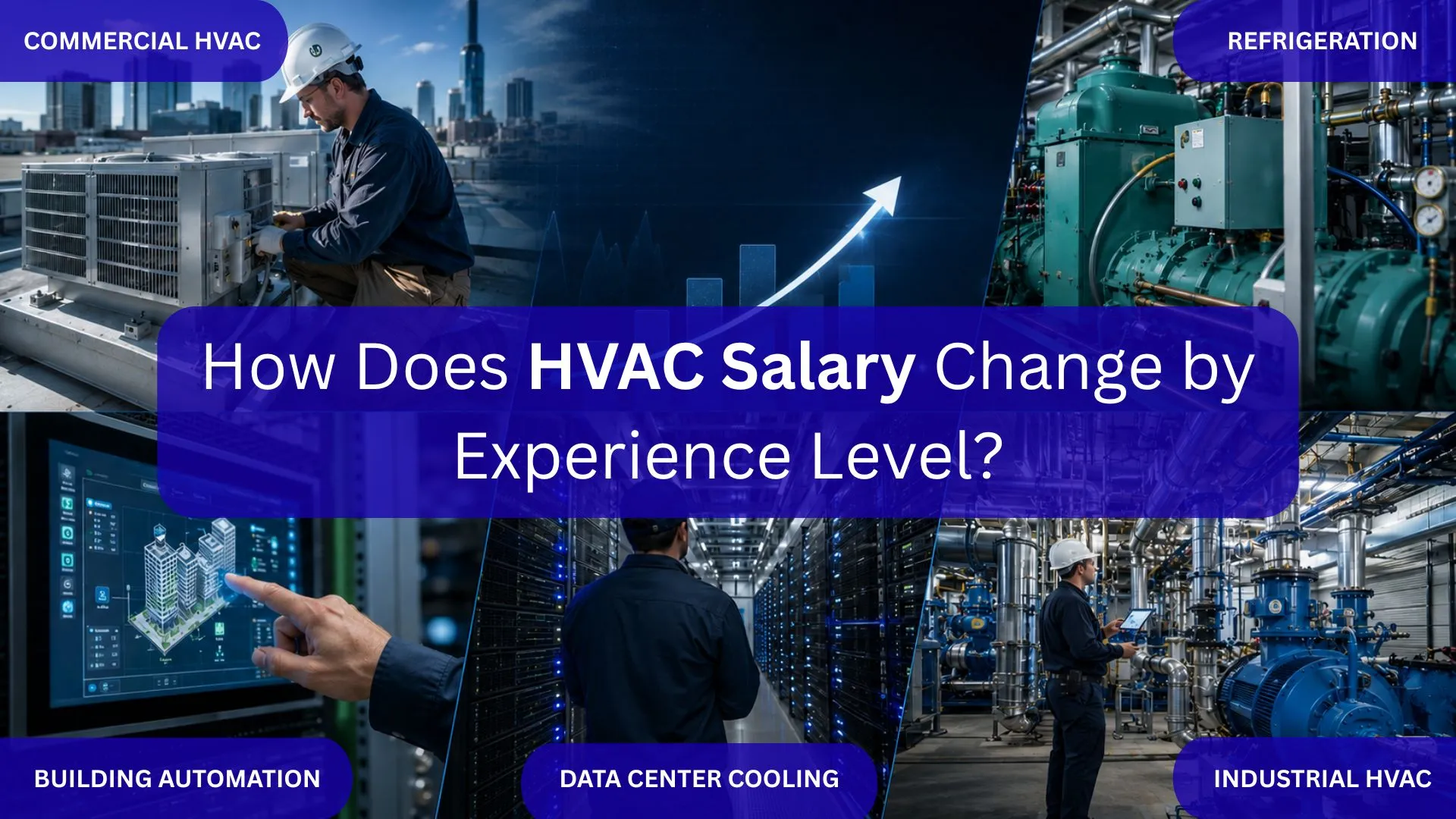
Technicians who specialize in refrigeration, chillers, building automation, or industrial HVAC systems often command the highest hourly rates in the profession. These positions require advanced technical knowledge and years of practical experience, but they also offer some of the strongest long-term earning potential.
Which HVAC Specializations Pay the Most?
Not all HVAC technicians earn the same salary. Your area of specialization can have an even greater impact on earnings than years of experience alone.
Technicians who work on larger, more complex systems typically earn higher salaries because they require additional training, certifications, and diagnostic skills.
Specialization
Typical Annual Salary
Residential Service
$50,000–$70,000
Commercial HVAC
$55,000–$75,000
Commercial Refrigeration
$75,000–$100,000+
Building Automation (BAS)
$80,000–$110,000+
Healthcare Facilities
Approximately 10% Above Average
Marine HVAC
Approximately 20% Above Average
Data Centers
$90,000–$110,000
Residential HVAC
Residential service is where most technicians begin their careers.
Work generally includes:
Air conditioner installation
Furnace repair
Heat pump maintenance
Indoor air quality systems
Seasonal tune-ups
While residential HVAC provides steady work and valuable experience, salaries are generally lower than commercial specialties.
Commercial HVAC
Commercial technicians work on larger systems found in offices, hospitals, schools, warehouses, shopping centers, and industrial buildings.
Because these systems are larger, more complex, and often business-critical, employers typically pay commercial technicians higher salaries than residential technicians.
Commercial Refrigeration
Commercial refrigeration is one of the highest-paying HVAC specialties.
Technicians commonly work with:
Walk-in coolers
Freezers
Grocery store refrigeration
Restaurant equipment
Cold storage facilities
Since relatively few technicians specialize in refrigeration, demand remains high and salaries are often well above the national average.
Building Automation Systems (BAS)
Building automation combines HVAC with modern control technology.
Technicians in this field work with:
Smart building controls
Energy management systems
Programmable controllers
Remote monitoring
HVAC optimization software
Because these systems require both mechanical and technical expertise, BAS specialists are among the highest-paid professionals in the HVAC industry.
Niche Specializations
Certain industries offer additional earning potential because of their technical complexity.
Examples include:
Healthcare facilities
Marine HVAC
Data centers
Industrial manufacturing
Pharmaceutical facilities
These environments require strict temperature control, specialized equipment, and minimal downtime, making experienced technicians especially valuable.
Do Union HVAC Technicians Make More Than Non-Union?
Union membership is another factor that can influence HVAC technician earnings. According to industry wage data referenced in our research, union HVAC technicians earn approximately 23% more than non-union technicians on average. In addition to higher wages, union positions often include valuable benefits such as healthcare, retirement plans, paid apprenticeships, and negotiated annual wage increases. That doesn't necessarily mean union employment is the best choice for everyone.
Union HVAC Careers
Union positions typically offer:
Structured apprenticeship programs
Predictable wage increases
Pension plans
Employer-paid healthcare
Additional job security
Ongoing training opportunities
Many technicians appreciate the stability and clearly defined career progression offered through union organizations.
Non-Union HVAC Careers
Non-union employers often provide:
Greater flexibility
Faster hiring
Performance-based raises
Commission opportunities
Easier transition into management
Faster path toward starting an HVAC business
Some of the highest-paid HVAC professionals begin in non-union companies before moving into commercial contracting or launching their own businesses. Ultimately, both career paths can provide excellent earning opportunities. Your long-term income will depend less on union membership alone and more on your experience, technical skills, certifications, specialization, and willingness to continue learning throughout your career.
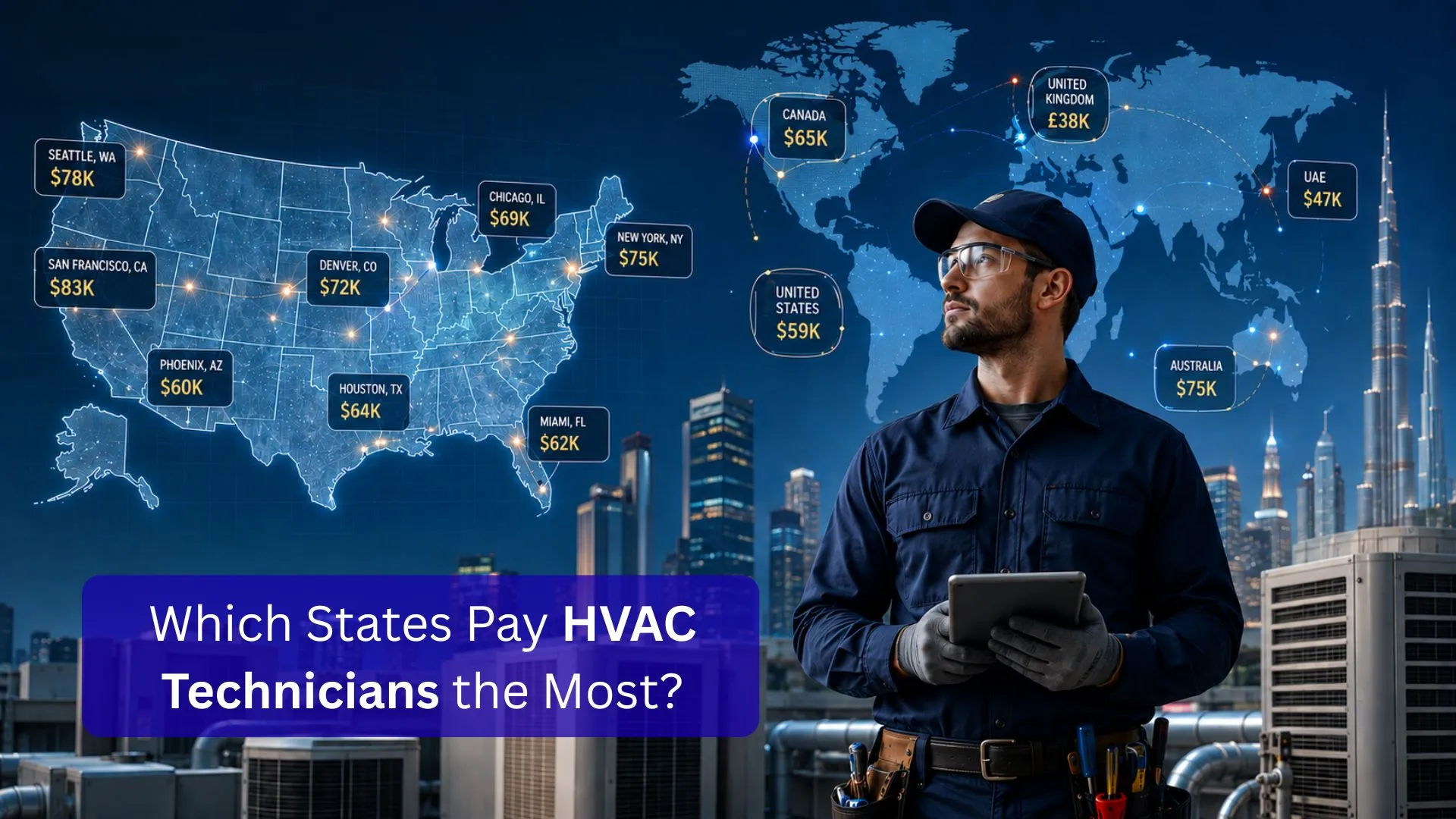
Which States Pay HVAC Technicians the Most?
Where you work can have a major impact on how much you earn as an HVAC technician. Climate, cost of living, demand for skilled labor, and local construction activity all influence salary levels across the United States.
For example: states with extreme weather conditions often have higher demand for heating and cooling services throughout the year. Large metropolitan areas with commercial buildings, healthcare facilities, manufacturing plants, and data centers also tend to offer better-paying opportunities.
Below are some of the highest-paying states for HVAC technicians based on current salary data.
State
Average Annual Salary
Massachusetts
$65,300
California
$64,200
New York
$63,200
North Carolina
$63,200
Alaska
$63,000
Connecticut
$62,200
Washington
$61,100
New Jersey
$60,500
While these states report higher average salaries, it's important to look beyond the numbers.
For example: technicians working in California or New York may earn more than the national average, but housing, transportation, and living expenses are also considerably higher. A slightly lower salary in another state may actually provide greater purchasing power after everyday expenses are considered.
Highest-Paying Cities
Some cities consistently offer higher wages because of strong commercial construction activity and demand for experienced technicians.
Examples include:
Mesa, Arizona – Approximately $56.02 per hour
Denver, Colorado – Approximately $34.41 per hour
Nashville, Tennessee – Approximately $31.56 per hour
Urban areas often have a greater concentration of hospitals, office buildings, industrial facilities, universities, and large residential developments, creating more opportunities for skilled HVAC professionals. If you're willing to relocate, researching both salary levels and local living costs can help you maximize your long-term earning potential.
Which Country Pays HVAC Technicians the Most?
While HVAC is a well-paying trade in many countries, salary levels vary considerably depending on labor demand, certifications, local economies, and industry regulations.
To provide a broader perspective, we've compared average HVAC technician salaries across six major markets.
Country
Average Annual Salary (Local Currency)
Approx. USD
Entry-Level
Experienced
United States
$59,810
$59,810
~$48,000
$77,000–$90,000+
Australia
AUD $96,000–$101,000
~$63,000–$67,000
AUD $69,000–$74,000
AUD $108,000–$120,000+
Canada
CAD $65,000–$73,000
~$48,000–$54,000
CAD $52,650
CAD $81,000–$85,000+
United Kingdom
£41,000
~$52,000
£29,700
£46,000–£54,000
United Arab Emirates
AED 30,000–100,000+
~$8,000–$27,000
AED 25,000–35,000
AED 60,000–165,000+
India
₹2.5L–8L (up to ₹15L)
~$3,000–$10,000
₹2.5L–4L
₹8L–15L
Rather than simply comparing currency conversions, it's important to understand what drives these differences.
Australia Offers the Highest Earning Potential
Among the countries compared, Australia currently offers the strongest earning potential for qualified HVAC technicians. High demand for skilled tradespeople, infrastructure projects, mining operations, and commercial construction continue to push salaries upward. Technicians working in specialized industries or remote locations often earn well above the national average through overtime and additional allowances.
Canada and the United Kingdom
Canada and the UK also provide competitive salaries, particularly for experienced technicians working in commercial HVAC, refrigeration, or industrial maintenance. Regional demand varies considerably, so salaries in major cities are often higher than national averages.
Understanding the UAE Salary Market
The UAE presents one of the widest salary ranges among all the countries compared. Entry-level technicians working in general maintenance roles may earn relatively modest salaries. However, experienced professionals employed by large contractors, commercial developers, oil and gas companies, or government projects can earn significantly more, especially when housing, transportation, and other allowances are included. This creates two distinct salary tiers within the same market.
HVAC Technician Salaries in India
India's HVAC industry continues to grow as commercial construction, data centers, healthcare facilities, and smart buildings expand across major cities. While entry-level salaries remain relatively modest, experienced technicians working with multinational companies or specialized commercial systems can earn substantially higher salaries than the national average.
Looking Beyond Salary Alone
When comparing international opportunities, salary should never be the only consideration.
Factors such as:
Cost of living
Tax rates
Healthcare benefits
Housing allowances
Retirement plans
Visa requirements
Career advancement
All affect your overall quality of life and long-term financial outlook. For many professionals, the best opportunity isn't necessarily the country with the highest advertised salary, but the one offering the strongest combination of income, benefits, and career growth.
Why Is HVAC Pay Rising?
HVAC salaries have steadily increased over the past decade, and industry experts expect this trend to continue. Several factors are contributing to rising wages across the profession.
1. Growing Demand for Skilled Technicians
Many experienced HVAC professionals are approaching retirement, while fewer young workers are entering the skilled trades. This growing labor shortage has increased competition among employers looking to hire qualified technicians, resulting in better salaries, signing bonuses, and improved benefits.
2. Growth in Residential and Commercial Construction
New homes, office buildings, hospitals, schools, warehouses, and manufacturing facilities all require HVAC systems. At the same time, aging buildings continue to replace outdated heating and cooling equipment with more energy-efficient systems, creating consistent demand for installation and maintenance professionals.
3. Heat Pumps and Energy Efficiency
Governments and businesses continue investing in energy-efficient technologies to reduce operating costs and carbon emissions.
As more buildings adopt:
Heat pumps
High-efficiency air conditioners
Smart thermostats
Building automation systems
Connected HVAC controls
employers increasingly seek technicians who understand modern equipment and advanced diagnostics. Those specialized skills often command higher salaries than traditional residential service work.
4. Technology Is Changing the HVAC Industry
Today's HVAC technicians do far more than install furnaces and air conditioners.
Modern systems often integrate:
Building automation
Remote monitoring
Smart sensors
Internet-connected controls
Energy management software
Technicians who continue learning new technologies position themselves for higher-paying commercial and industrial roles. As HVAC systems become more sophisticated, employers are willing to pay a premium for professionals who can troubleshoot both mechanical and electronic components.
Thinking About Starting Your Own HVAC Business?
For many technicians, business ownership represents the highest long-term earning opportunity in the HVAC industry. While experienced technicians often earn strong salaries as employees, owning an HVAC company creates the potential to build recurring revenue, hire additional technicians, and grow beyond hourly wages. Business owners may earn anywhere from $70,000 to more than $500,000 per year, depending on factors such as company size, service area, profitability, and the number of employees. However, running an HVAC business involves much more than technical expertise. Success depends on estimating jobs accurately, managing employees, controlling inventory, marketing services, maintaining customer relationships, and overseeing day-to-day operations.
If you're interested in learning more about HVAC business ownership, check out our detailed guide:
HVAC Business Owner Salary in 2026: Net Worth & Growth Tips. In that guide, we cover:
Experience certainly plays a major role in determining an HVAC technician's salary, but certifications can accelerate career growth by opening the door to higher-paying positions and specialized work. Many employers use certifications to evaluate technical knowledge, safety awareness, and the ability to work independently. While a certification doesn't automatically guarantee a salary increase, it often qualifies technicians for commercial projects, manufacturer-authorized service work, and supervisory roles. Here are the certifications that consistently have the biggest impact on earning potential.
EPA Section 608 Certification
The EPA Section 608 Certification is one of the most important credentials for HVAC technicians in the United States. Anyone who handles refrigerants is legally required to hold this certification.
There are four certification categories:
Type I – Small appliances
Type II – High-pressure systems
Type III – Low-pressure systems
Universal – Covers all equipment types
Technicians who earn the Universal Certification have access to the widest range of job opportunities because they can legally work on virtually every type of HVAC and refrigeration system.
North American Technician Excellence (NATE) is one of the most respected voluntary certifications in the HVAC industry. Many contractors actively seek NATE-certified technicians because the certification demonstrates verified technical knowledge and practical troubleshooting skills.
Popular NATE specialty certifications include:
Air Conditioning
Heat Pumps
Gas Heating
Hydronics
Air Distribution
Commercial Refrigeration
Technicians with NATE certification often qualify for more advanced service work, commercial projects, and leadership opportunities.
Manufacturer Certifications
Many equipment manufacturers also provide their own technical training programs.
Examples include:
Trane
Daikin
Carrier
Lennox
Johnson Controls
Honeywell
These certifications become especially valuable for technicians working in:
Commercial HVAC
Building automation
Industrial facilities
Healthcare
Data centers
Employers frequently prefer technicians who are already trained on the equipment they install and service.
Specialized Training
As HVAC technology continues to evolve, employers increasingly value technicians with expertise in:
Building Automation Systems (BAS)
Variable Refrigerant Flow (VRF)
Commercial Refrigeration
Chillers
Heat Pumps
Energy Management Systems
Specializing in these areas can significantly increase long-term earning potential because relatively fewer technicians possess these advanced skills.
A Note on Diversity in the HVAC Industry
The HVAC industry has traditionally been male-dominated, but the workforce continues to become more diverse. More women are entering the skilled trades each year, supported by apprenticeship programs, technical schools, and workforce development initiatives across the United States. Like many skilled trades, HVAC rewards practical ability, certifications, and technical expertise. Career advancement is generally based on experience, problem-solving skills, and job performance rather than formal academic qualifications. As demand for qualified technicians continues to grow, the industry offers opportunities for people from a wide range of educational and professional backgrounds.
Final Thoughts
HVAC remains one of the most rewarding skilled trades for professionals seeking stable employment, competitive pay, and long-term career growth. While the national median salary is $59,810 per year, many technicians earn considerably more by gaining experience, earning certifications, specializing in commercial or industrial systems, and taking advantage of overtime opportunities. If you're just entering the trade, focus on building strong technical skills and earning key certifications such as EPA Section 608 and NATE. As your experience grows, moving into commercial HVAC, refrigeration, building automation, or supervisory roles can significantly increase your earning potential. The HVAC industry is also evolving rapidly. Growing demand for heat pumps, energy-efficient equipment, smart building controls, and connected HVAC systems means technicians who continue learning new technologies will be well-positioned for future opportunities. Whether you're exploring HVAC as a career or planning your next professional move, investing in your skills today can lead to a rewarding and financially stable future.
FAQs
What is the average HVAC technician salary?
According to the U.S. Bureau of Labor Statistics, the median HVAC technician salary in the United States is $59,810 per year, or approximately $28.75 per hour. Actual earnings vary depending on experience, certifications, specialization, overtime, and location.
How much do HVAC techs make per month?
Based on the national median salary, HVAC technicians earn approximately $4,984 per month before taxes and deductions. Technicians who regularly work overtime or emergency service calls often earn considerably more.
Can HVAC technicians make six figures?
Yes, Experienced technicians working in commercial refrigeration, building automation, industrial HVAC, healthcare facilities, or data centers can earn six-figure salaries. Business owners and senior supervisors may also exceed $100,000 annually depending on their market and workload.
Which country pays HVAC technicians the most?
Among the countries compared in this guide, Australia currently offers the highest average earning potential for qualified HVAC technicians. High demand for skilled trades, infrastructure projects, and specialized commercial work continue to support strong salaries.
Do union HVAC technicians make more than non-union technicians?
In many cases, yes, Union technicians often receive higher average wages along with valuable benefits such as healthcare, retirement plans, paid apprenticeships, and negotiated annual wage increases. However, non-union technicians may have greater flexibility, performance-based pay opportunities, and a faster path toward business ownership.
Does specialization matter more than experience?
Both are important, but specialization can have a greater impact on long-term earning potential. Technicians working in commercial refrigeration, building automation, industrial HVAC, or other specialized fields often earn significantly more than general residential technicians with similar years of experience.
Is HVAC a good career in 2026?
Yes, HVAC continues to offer stable employment, competitive salaries, paid apprenticeships, and strong career growth. Rising demand for energy-efficient systems, heat pumps, smart building technologies, and commercial HVAC services is expected to create excellent opportunities for skilled technicians in the coming years.
How reliable are HVAC salary estimates?
Salary estimates vary depending on the source and the methodology used to collect data. Government statistics typically rely on employer surveys, while salary platforms may use job postings or user-submitted information. Comparing multiple reputable sources provides the most balanced view of HVAC technician earnings.
D
Dr. Rajesh Rolen
Published on August 10, 2026
Share:
Enjoyed this article?
Explore more insights and industry knowledge in our blog collection.