Home/Blog/How VRF & VRV Systems Are Changing Commercial HVAC
How VRF & VRV Systems Are Changing Commercial HVAC
February 3, 2026
Dr. Rajesh Rolen
5 min read
The commercial HVAC industry is undergoing a remarkable transformation with VRV system and VRF system HVAC technologies. Modern buildings demand energy efficiency, flexible zoning, and precise temperature control, and VRF AC system and VRV AC system solutions are designed to meet these needs. By replacing conventional HVAC systems with variable refrigerant flow (VRF) or variable refrigerant volume (VRV) technologies, commercial projects can achieve superior comfort, reduced energy consumption, and smarter building management.
More VRF Projects Mean More Coordination. Keep the Numbers and Job Details Connected.
Commercial VRF/VRV work demands accurate calculations, clear project planning, and tight execution across multiple requirements. DuctArchitect helps HVAC Contractors keep project calculations, tasks, materials, and progress connected from planning to delivery.
Get 14 days of full access with no credit card required.
What are the Difference Between VRV and VRF?
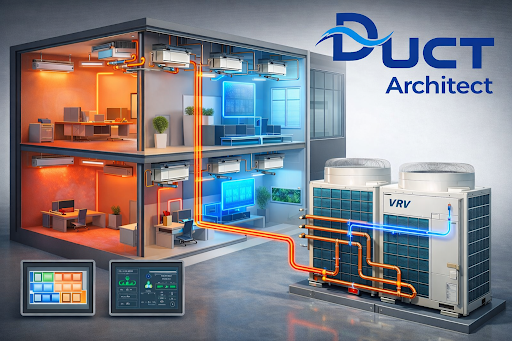
While many people assume VRV air conditioning and VRF AC systems are different, they represent the same underlying technology. The term VRV, trademarked by Daikin, stands for Variable Refrigerant Volume, while VRF, or Variable Refrigerant Flow, is the generic industry term. Both systems allow multiple indoor units to operate independently while connected to a single outdoor unit, optimizing energy usage for each zone.
VRV HVAC systems were first introduced in the 1980s and have since influenced how commercial buildings manage heating and cooling. The key distinction is largely historical and branding-based, but understanding it helps facility managers select the right equipment for their HVAC project management software workflows and long-term operational planning.
Core Features of VRF/VRV Systems
Energy Efficiency: VRF AC system technology uses inverter-driven compressors to modulate refrigerant flow based on actual demand. This allows each zone to consume only the energy required, resulting in lower electricity bills compared to conventional systems.
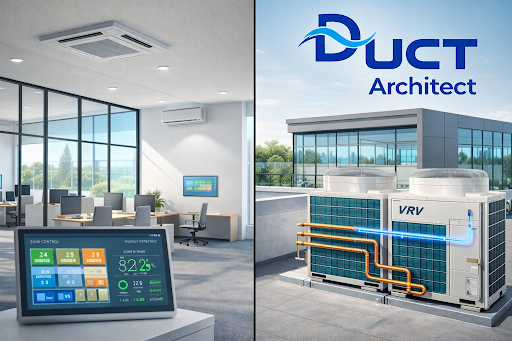
Zonal Comfort Control: Each indoor unit can be controlled individually, ensuring comfort in different areas without affecting other zones. This is especially useful in office complexes, hotels, hospitals, and multi-residential projects.
How a VRF AC System Works
A VRF unit operates by dynamically adjusting the refrigerant flow to match the heating or cooling demand of each indoor unit. Sensors detect temperature, humidity, and occupancy, while the outdoor unit modulates compressor speed accordingly. The system is fully automated and continuously balances energy consumption with comfort requirements.
The VRV AC system works on the same principle. Its modular design allows easy expansion for growing commercial spaces, making it ideal for phased construction projects. By enabling simultaneous heating and cooling, VRV HVAC systems offer flexibility unmatched by traditional split or water-cooled systems.
Components of a VRF/VRV System
Outdoor Units: Houses one or more variable-speed compressors that provide refrigerant to all indoor units.
Indoor Units: Multiple units connected via refrigerant piping; each can operate independently for heating or cooling.
Control System: Wired or wireless controllers and centralized management software integrate with HVAC project management software for monitoring and optimization.
Advantages of Implementing VRF and VRV Systems
1. Cost and Energy Savings
The precise modulation of refrigerant in VRF AC system designs significantly reduces energy waste. Buildings that adopt VRV air conditioning report energy savings of up to 40% compared to conventional HVAC setups. Over time, these savings offset the higher initial investment.
2. Flexibility in Design and Installation
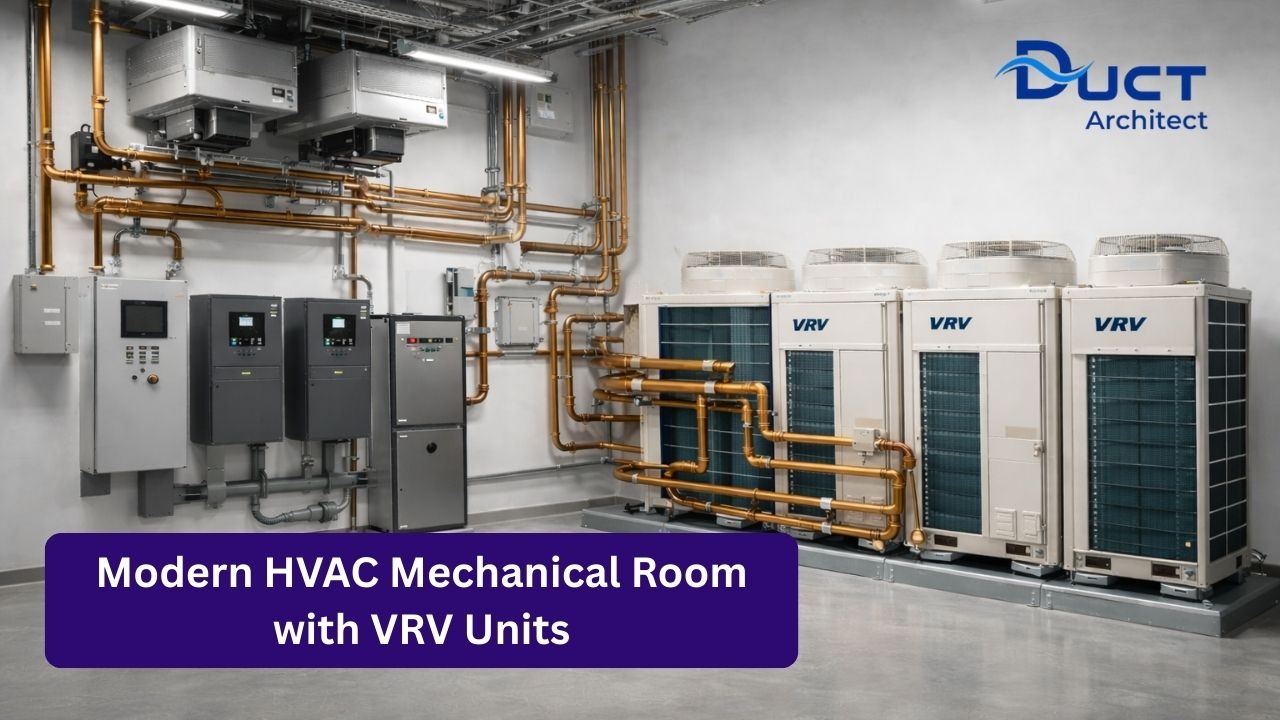
VRV HVAC systems are compact and modular, allowing architects and engineers to integrate them easily into tight mechanical rooms. Unlike traditional ducted systems, VRF/VRV systems require minimal space and reduce installation complexity.
3. Enhanced Building Management Integration
Modern VRF unit systems can integrate with building automation systems, enabling smart control, energy monitoring, and predictive maintenance. HVAC project management software can further optimize performance by analyzing system data and generating insights for maintenance planning.
Conclusion
The rise of VRV system and VRF system HVAC technologies is reshaping commercial HVAC design and operations. With benefits including energy efficiency, zonal comfort, installation flexibility, and intelligent control, these systems are fast becoming the standard for modern commercial buildings. Understanding the difference between VRV and VRF is critical for engineers, architects, and facility managers to implement these technologies effectively and harness their full potential.
FAQs
What is the difference between VRF and VRV in HVAC? VRF (Variable Refrigerant Flow) is the industry term, while VRV (Variable Refrigerant Volume) is a Daikin trademark. Both technologies are identical in function.
What technology helps VRF systems adjust cooling or heating demand? Inverter-driven compressors and advanced control algorithms continuously modulate refrigerant flow to match zone requirements.
What is a VRF system in HVAC and how does a VRF system work? A VRF system distributes refrigerant dynamically to multiple indoor units, adjusting flow to maintain comfort in each zone efficiently.
What is VRF and VRV in HVAC? Both terms describe HVAC systems that allow multiple indoor units to operate independently while connected to a single outdoor unit.
What is the purpose of VRV? The VRV system aims to optimize energy usage, provide zone-level comfort, and offer scalable solutions for commercial buildings.
Can VRF AC systems provide simultaneous heating and cooling? Yes, advanced VRF heat recovery systems allow simultaneous heating and cooling across different zones.
How do VRV AC systems save energy compared to traditional HVAC? By modulating refrigerant flow and using part-load operation, VRV systems reduce unnecessary energy consumption in unoccupied or low-load zones.
Are VRF units suitable for retrofitting existing buildings? Yes, their compact, modular design makes VRF/VRV systems ideal for retrofit projects with limited space.
Can VRF HVAC integrate with smart building systems? Yes VRF/VRV systems can integrate with building automation and HVAC project management software for monitoring, maintenance, and energy optimization.
What types of indoor units are available for VRF/VRV systems? Common indoor units include wall-mounted, ceiling cassette, ducted, and floor-standing types, allowing flexible integration into commercial spaces.
D
Dr. Rajesh Rolen
Published on February 3, 2026
Share:
Enjoyed this article?
Explore more insights and industry knowledge in our blog collection.