

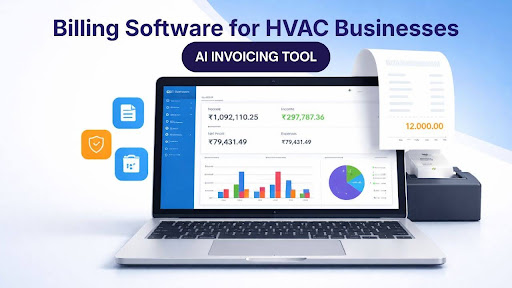
Manual billing slows down HVAC businesses, increases errors, and delays payments. Field technicians often rely on handwritten notes, disconnected systems, or generic invoice formats that do not match HVAC job requirements. This leads to missed line items, incorrect pricing, and poor customer experience.
Every Delayed Invoice Delays Your Cash.Manual billing creates avoidable errors, slows invoice processing, and makes payment follow-up harder. DuctArchitect keeps invoices, payment status, and financial reporting connected so completed HVAC work can turn into collected revenue faster.
No credit card required. Get 14 days of full access. |
Billing software for HVAC solves these issues by standardizing invoicing, automating calculations, and connecting job data directly to billing. When combined with AI invoicing, it further reduces manual input and ensures consistent, accurate documentation for every service call.
This guide explains how Best HVAC billing software works, what features matter, and how to choose the right system for your business.
What is HVAC billing?
HVAC billing refers to the structured process of creating invoices for heating, ventilation, and air conditioning services. It is more complex than general invoicing because each job varies in scope, materials, and labor.
An HVAC service invoice must clearly reflect the service performed and the associated costs. Poor billing practices often lead to delayed payments, disputes, and revenue loss.
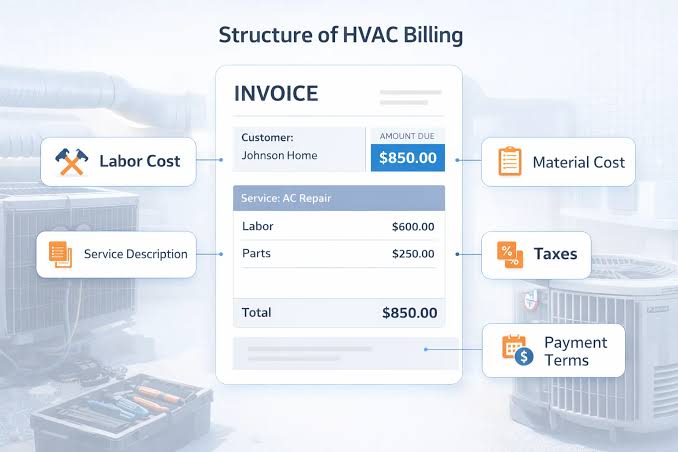
Key components of heating and cooling invoice systems include:
- Labor charges based on service duration
- Material and equipment costs
- Service descriptions such as air conditioning invoice or repair work
- Taxes and compliance charges
- Payment terms and due dates
Using HVAC billing software ensures that all elements are automatically included, improving consistency and reducing manual errors.
What are the four types of invoices?
Understanding invoice types is essential for accurate billing and financial clarity. HVAC businesses must use the correct invoice type based on the job scenario to ensure proper documentation and compliance.
Using the right invoice type helps:
- Improve billing transparency for customers
- Reduce disputes and misunderstandings
- Maintain structured financial records
- Align invoices with business workflows
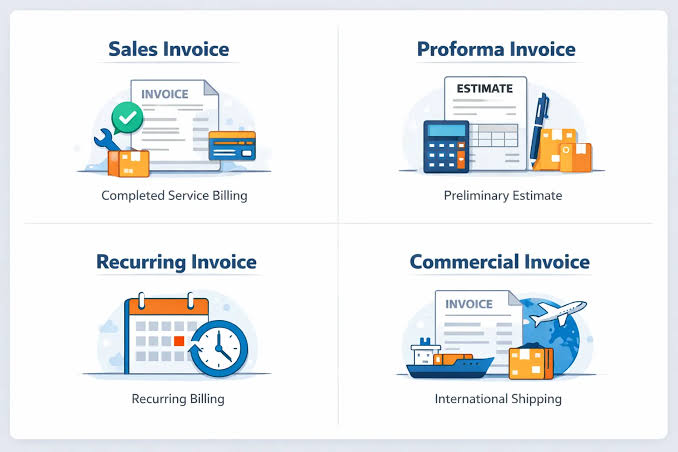
Sales Invoice
A sales invoice is issued after completing a service and represents the final billing document. It includes all charges related to labor, materials, and taxes, making it the most commonly used format in HVAC billing software.
This type of invoice ensures customers clearly understand the total payable amount and supports faster payment processing.
Proforma Invoice
A proforma invoice is a preliminary estimate shared before the service begins. It helps customers review costs and approve the job before execution, especially in large HVAC installations.
It improves transparency and reduces the risk of pricing disputes once the job is completed.
Recurring Invoice
A recurring invoice is used for ongoing services such as maintenance contracts or AMC plans. It is generated automatically at fixed intervals, reducing manual effort and ensuring consistent billing.
This type of invoice is critical for businesses offering subscription-based HVAC services.
Commercial Invoice
A commercial invoice is used for international transactions involving HVAC equipment or parts. It includes detailed shipment and product information required for customs clearance.
This ensures compliance with international trade regulations and smooth logistics handling.
Why HVAC businesses need dedicated billing software
Generic tools fail to handle HVAC invoicing requirements because they are not designed for service-based operations. HVAC businesses deal with dynamic job conditions, variable pricing, and on-site service execution, which generic billing systems cannot accurately capture.
Unlike standard invoicing tools, billing software for HVAC aligns with real-time workflows and ensures that every service detail is properly documented and billed. This becomes critical as businesses scale and handle multiple jobs daily.
Without HVAC billing software, businesses commonly face:
- Incomplete invoices due to missed service or material entries
- Delays in invoice generation after job completion
- Errors in HVAC invoice software calculations, especially in complex jobs
- Lack of centralized tracking for invoices and payments
- Communication gaps between field technicians and office staff
In contrast, HVAC invoicing software provides a structured and automated approach to billing. It ensures that job data flows directly into invoice creation, reducing manual dependency and improving accuracy.
With the right system in place, businesses can:
- Generate invoices instantly using real-time job data
- Standardize billing using HVAC service invoice formats
- Enable technicians to create invoices via HVAC invoice app in the field
- Track payments and outstanding invoices from a centralized dashboard
- Improve cash flow with faster billing cycles and reduced delays
For growing businesses, especially HVAC billing software for small business users, this shift from manual to automated billing is not optional. It directly impacts revenue, improves team coordination between field and office, and customer satisfaction.
HVAC-specific invoice templates
Using structured templates like HVAC invoicing template free options helps standardize billing across different service scenarios. Instead of creating invoices from scratch, businesses can rely on predefined formats that already include all required billing components.
These templates are designed specifically for HVAC operations, ensuring that service details, pricing, and compliance elements are consistently captured. This reduces dependency on manual formatting and minimizes the risk of missing critical billing information.
Key features of HVAC billing software
Key advantages of using HVAC service invoice template formats include:
- Consistency in billing structure
Every invoice follows the same format, which makes it easier for customers to understand charges and for businesses to maintain uniform records across all jobs. This consistency also improves professionalism in client communication.
- Accurate service and cost breakdown
Templates ensure that labour, materials, and additional charges are clearly separated. This reduces confusion, prevents disputes, and improves transparency in heating and cooling invoice documentation.
- Faster invoice creation process
Instead of manually designing invoices, technicians or office staff can quickly fill in job-specific details. This significantly reduces the time required to generate invoices after service completion.
- Reduced human errors in billing
Predefined fields and structured layouts eliminate common mistakes such as missing charges or incorrect formatting. This is especially important when handling multiple jobs daily using HVAC invoice software.
- Professional presentation to customers
Well-structured templates create a polished and reliable impression. This strengthens customer trust and increases the likelihood of timely payments.
Best HVAC Billing Software for Small Businesses
Choosing the right HVAC billing software for small businesses helps reduce manual work, improve accuracy, and speed up payments. Small teams need tools that are simple, fast, and built for real-time invoicing.
The best HVAC billing software should offer:
- Easy setup and simple interface for quick adoption
- Mobile invoicing via HVAC invoice app for field use
- AI-powered automation in HVAC invoicing software
- Affordable pricing with essential features
- Scalability as your business grows
Comparison: HVAC Billing Software vs Manual Billing
Feature | Manual Billing | HVAC Billing Software |
| Invoice creation | Time-consuming and manual | Instant and automated |
| Accuracy | High risk of errors | High accuracy with automation |
| Payment tracking | Difficult to manage | Real-time tracking |
| Mobility | Office-dependent | Field-ready via HVAC invoice app |
| Scalability | Limited | Easily scalable |
Small businesses still using spreadsheets or HVAC invoice book methods face delays and errors. Switching to digital billing improves cash flow and overall efficiency.
AI invoicing generates invoices without manual input
AI simplifies HVAC invoice software workflows by automatically converting job details into structured invoices without manual input. It captures service data, pricing elements, and customer details in real time, ensuring that every invoice is accurate and complete.
This reduces dependency on manual data entry and eliminates common billing errors. It also speeds up invoice generation, allowing HVAC businesses to create and send invoices immediately after job completion.
AI invoicing further improves efficiency by:
- Automatically capturing service details from job records
- Structuring air conditioner AC invoice formats accurately
- Reducing calculation and data entry errors
- Handling complex, multi-line service invoices efficiently
Mobile invoice creation
Mobile invoicing allows technicians to generate invoices directly from the job site using an HVAC invoice app. This removes the need to return to the office for billing tasks and speeds up the entire invoicing process.
It ensures that invoices are created immediately after service completion, improving turnaround time and reducing delays in customer communication.
Key benefits include:
- Real-time invoice generation at service locations
- Instant sharing of invoices with customers
- Reduced dependency on office staff
- Improved field-to-office coordination
Payment tracking and reminders
Tracking payments manually is inefficient and often leads to missed follow-ups. HVAC billing companies rely on automated systems to monitor invoice status and manage collections effectively.
Billing software provides a centralized view of all invoices, helping businesses identify pending payments and take timely action.
Key benefits include:
- Automated reminders for overdue invoices
- Real-time tracking of payment status
- Centralized dashboard for financial visibility
- Improved cash flow management
How AI invoicing improves HVAC billing
AI invoicing enhances HVAC accounting software by automating complex billing processes. It ensures that invoices are accurate, consistent, and generated quickly without manual intervention.
This allows HVAC businesses to focus more on service delivery and less on administrative tasks.
Key benefits include:
- Faster invoice creation from job data
- Reduced human errors
- Improved documentation accuracy
- Better transparency for customers
- Scalable billing processes
Download HVAC Invoice Template and Start Billing Faster
Manual invoicing leads to errors, delays, and lost revenue. Using the best HVAC billing software improves billing speed, accuracy, and overall business performance.
Download your HVAC invoicing template free
Start creating accurate invoices and improve your cash flow today.
Conclusion
Billing software for HVAC is no longer optional for businesses that want accurate invoicing and steady cash flow. Manual processes lead to errors, delays, and lost revenue, while AI-powered tools simplify billing and improve efficiency.
By using HVAC billing software, businesses can automate invoices, reduce administrative work, and deliver a better customer experience. From HVAC invoicing software to mobile-friendly HVAC invoice app solutions, the shift toward digital billing is essential for growth.
If your current system still relies on manual methods or outdated tools like an HVAC invoice book, it is time to upgrade. The right solution will help you invoice faster, get paid on time, and scale operations without complexity.
Start using smarter billing tools and take control of your HVAC business finances today.
FAQs
What is the best billing software for HVAC businesses?
The best HVAC billing software includes features like AI invoicing, mobile access, customizable templates, and real-time payment tracking. It should allow technicians to generate invoices on-site and help businesses automate billing processes for faster payments and improved accuracy.
How does AI invoicing help HVAC businesses?
AI invoicing automates the process of converting job data into structured invoices, reducing manual errors and saving time. It ensures accurate calculations, faster invoice generation, and consistent documentation, which improves cash flow and operational efficiency.
Can HVAC technicians create invoices from the field?
Yes, using an HVAC invoice app, technicians can create and send invoices directly from the job site. This eliminates delays, improves customer experience, and ensures that billing is completed immediately after service.
What should be included in an HVAC service invoice?
A complete HVAC service invoice should include labor charges, material costs, service description, taxes, and payment terms. Using HVAC invoicing software ensures all these components are automatically included and accurately calculated.
Is there free HVAC invoicing software available?
Yes, some tools offer HVAC invoice software free versions with basic features like templates and manual invoicing. However, advanced features such as generating invoices without manual input , real-time tracking, and integrations are typically available in paid HVAC billing software.